Why Some Gift Card Bonuses Require a Specific Payment Method
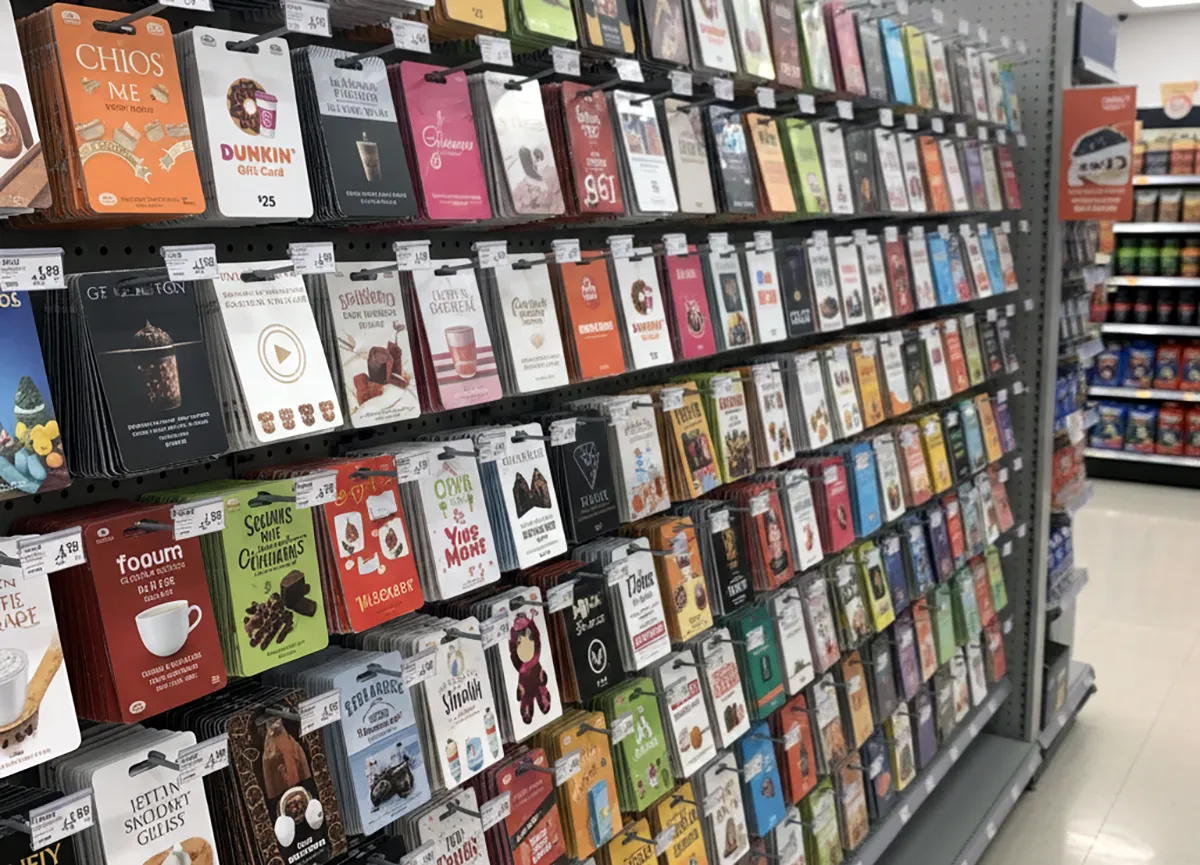
How processing fees, fraud chargebacks and balance-recycling bans decide which payment method a gift card reload bonus will actually pay out on.
Some gift card bonuses require a specific payment method because the bonus is funded out of the brand's own margin, and the cheapest, lowest-risk way to load a card is the one the brand will pay you for. A reload made inside a retailer's app from a linked bank account or debit card costs the merchant less in processing fees and carries far less fraud exposure than a stolen credit card number typed into a checkout page — so that is the channel the offer is written around. Starbucks is the clearest working example.
Its rewards terms pay Bonus Stars only for a digital reload: "Digitally reload $30+ to your Starbucks Card in your Starbucks account to receive 10 Bonus Stars or $50+ to receive 25 Bonus Stars," according to the Starbucks Rewards Terms of Use. Hand a barista a credit card at the register and you have paid for coffee, not earned a reload bonus.
Verification note: Program terms and availability can change. This page was checked against linked sources on November 20, 2026.
The bonus is attached to a channel, not to the dollars
Read a reload offer closely and you will usually find the condition is about *where and how* the money moves, not how much you spend overall. The Starbucks terms specify a digital reload inside your own account — app or web — at a dollar threshold. That excludes a register-side top-up, a third-party purchase, and in practice anything that does not run through the account the brand controls.
There is a second reason the condition has to be written that way. Under the brand's own 2026 Rewards relaunch FAQ, "Stars are not earned on purchases of Starbucks Cards, Starbucks Card reloads and alcohol." Loading money is not a purchase in the program's eyes, so it earns nothing at the normal rate. The only way to reward it is a separate, tightly scoped bonus with its own rules — which is exactly what a payment-method condition is.
So when an offer says "load through the app," treat that as the qualifying act. Meeting the dollar amount by another route generally does not substitute.
Why the funding source changes the brand's cost
Processing cost is the quiet driver. Federal law caps debit interchange — the per-transaction fee a merchant's bank pays the card issuer — for large issuers at $0.21 plus 0.05% of the transaction, plus a $0.01 fraud-prevention adjustment, effective October 1, 2011, under the Federal Reserve's Regulation II standards. Credit interchange has no such cap.
That gap is real but not uniform, and the limits matter if you are trying to predict which offers will carry a payment condition. The cap does not reach issuers with under $10 billion in assets, and the Fed's 2023 interchange data put average covered-transaction fees at $0.24 for single-message and $0.22 for dual-message transactions. The spread varies by card and network rather than sitting at one number.
The practical upshot for a shopper: a brand subsidizing thousands of reloads a day has a measurably cheaper path, and it will route the incentive down that path. A bank-linked or debit-funded load leaves more of the promotional budget intact than a credit-funded one.
Fraud risk is the other half of the rule
Gift card balances behave like cash, and that makes them a favored target. Visa's Verifi has warned that eGift cards bought with stolen card data are resold for cash before the legitimate cardholder notices the charge, and Riskified's data indicates a gift-card chargeback lands roughly twice as fast as one on physical goods. The merchant absorbs that loss — the goods are already spent.
A load from a logged-in account with a linked bank account or verified debit card is a much harder transaction to commit with stolen credentials than a one-off credit card entry at checkout. Requiring the account-based channel is a fraud control first and a promotion rule second. Retailers say so plainly in their own policies.
Target's help pages state that "Visa Gift Cards cannot be purchased with a Target GiftCard" and separately reserve "the right to reject or deactivate any gift card to prevent fraud, suspected fraud or abuse," per Target's gift card help article.
Why you cannot recycle a bonus balance into another bonus
The obvious shopper move — use the promotional balance to buy the next gift card and earn the bonus again — is blocked by terms at nearly every major issuer. Amazon's balance terms say the balance "cannot be used to purchase other Gift Cards, prepaid open loop cards, or certain third-party gift cards." Netflix's gift card and balance terms use the same construction: "Gift Cards or Netflix Balance cannot be used to purchase other gift cards," and the balance cannot be reloaded, resold, or transferred for value. Two different companies, two unrelated businesses, the same clause.
That consistency tells you this is a standard control against balance laundering and bonus stacking, not one retailer's quirk. It also means the arithmetic on a reload bonus is a one-time return on new money you bring in, not a loop you can run. Plan around a single qualifying load per threshold.
Your own card rewards can disappear on the same transaction
The retailer's bonus and your credit card's rewards are decided by two different companies, and they can disagree. American Express states that cash-equivalent transactions — including purchases of gift cards and reloading of prepaid cards — do not earn Membership Rewards points, according to its Help Center guidance on purchases that do not earn points. So a shopper can satisfy a retailer's reload condition and still lose the points they expected from their own card on the same dollars.
Worth checking before you assume a large load earns twice. A short pre-load check:
- Does the offer name a channel (app, web, in-account) rather than just a dollar amount? Use that channel.
- Does the threshold have to be met in a single load, as Starbucks' $30 and $50 tiers are written?
- Will your funding card treat the load as a cash equivalent and pay no rewards?
- Are you trying to pay with an existing gift card balance? Expect that to be refused.
These conditions are policy, not physics
Payment-method rules get reversed, which is why last year's reading of an offer is not reliable today. Starbucks separated earn rate from payment method on March 10, 2026, moving to tier-based rates — Green at 1 Star per dollar, Gold at 1.2, Reserve at 1.7 — so status rather than tender sets the rate, per the announcement of the reimagined program. The reload bonus and the ordinary earn rate are separate mechanics, and a change to one does not necessarily move the other.
Before counting on a bonus, open the sponsor's current rewards terms and read the reload clause as it stands that day; thresholds and qualifying channels are the parts most likely to have moved.
Frequently Asked Questions
Does paying with a credit card at the register ever count toward a reload bonus?
Not under the Starbucks terms as written. The rewards terms tie Bonus Stars to a digital reload of $30 or more inside your Starbucks account, so a register payment is a purchase rather than a qualifying load.
Can I split a reload across two smaller loads to hit a $50 tier?
The Starbucks terms describe the tiers as single digital reloads of $30+ or $50+. Read the current clause before assuming smaller loads aggregate.
Why would a merchant refuse my gift card as payment for another gift card?
Both Amazon's and Netflix's balance terms bar using a balance to buy other gift cards. It prevents a promotional or fraudulently obtained balance from being converted into fresh cards that are harder to trace.