How Return Labels Work for Holiday Online Orders
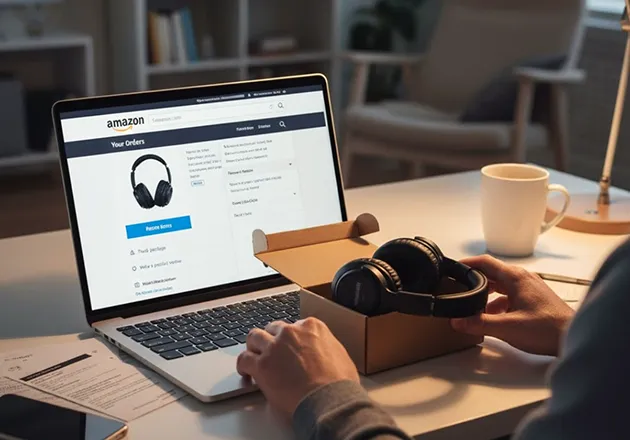
Learn how holiday return labels, QR codes, deadlines, and refund timing work before you ship.
A return label is a prepaid, pre-addressed shipping label that routes a holiday online order back to the retailer's returns center. You start the return in the retailer's returns portal, which creates the label or a QR code with the address, tracking, and postage information. FedEx explains in its return shipments guide that postage is paid by the party agreed in the return.
For holiday gifts, that means checking the retailer's portal first shows who pays, where to send the item, and whether you need a printer.
Verification note: Program terms and availability can change. This page was checked against linked sources on November 05, 2026.
Where Holiday Return Labels Come From
Most online holiday returns begin in the retailer's returns portal, not at the carrier counter. You enter the order number, select the item and reason, then receive a label to print or a QR code to scan. The label or code encodes the returns-center address, tracking number, and postage payment.
Amazon shoppers, for example, start this process in Order History to receive a QR code or label for a holiday return.
How Do You Return Without a Printer?
Many carriers now let you return with only a phone. USPS describes in its Label Broker page a system where the shopper receives a QR code plus an 8-10 character ID by email or text, and USPS prints the label at participating Post Offices or kiosks. FedEx and UPS offer similar in-store printing.
You pack the item, bring the QR code or mobile barcode, and staff print and attach the label at a participating location.
- Pack the item securely with any return form the retailer requires.
- Save the retailer email showing participating drop-off sites.
- Show the QR code or barcode on your phone at the counter.
- Keep the tracking number and drop-off receipt until the refund posts.
What Do Holiday Deadlines Change?
Holiday extensions give more time, but the retailer's policy still controls eligibility. Amazon states in its holiday return policy that most items bought Nov. 1-Dec.
31, 2026 are returnable through Jan. 31, 2027, with Apple-brand products returnable through Jan. 15, 2027.
The FTC notes in its guide to returns and refunds that there is no general federal right to return an online purchase for change of mind. Policies vary by store, and many end after 30 or 90 days. Check the seller's site, receipt, or packaging before shipping.
A holiday extension does not cover every category, and final-sale or marketplace items may follow different rules.
Who Pays and When Do Refunds Arrive?
Return shipping is often deducted from the refund, and packaging rules vary by program. Verify who pays in the returns portal before you print or scan, and keep tracking and drop-off receipts. For phone, mail, or online orders, FTC guidance under the Mail Order Rule calls for shipment within the promised time or 30 days if no time was stated.
For most payment types, the seller provides a refund within 7 business days after accepting the return. Amazon notes that credit-card refunds usually appear in 3-5 business days after it issues the refund, with processing taking up to 30 days. Wait for the tracking to show delivery, then watch for the refund notice before discarding receipts.