Hanukkah Gift Exchange Ideas for Kids on a Budget
Stretch a fixed Hanukkah budget across all eight nights of 2026 with a free dreidel-pot exchange, handmade gifts, and a small-parts safety check.
The cheapest Hanukkah gift exchange for kids is the one the holiday already built in: a dreidel pot of chocolate gelt, where every child antes one coin and plays for the pile. Beyond that, the budget moves furthest when you treat the eight nights as eight separate, small occasions — one wrapped gift, one handmade gift, one experience, one shared game night — rather than eight shopping trips. Hanukkah 2026 begins at sundown on Friday, December 4 and ends at nightfall on Saturday, December 12, according to Hebcal's calendar for 5787.
That is eight nights to cover, which is the real pressure point for families with several children — and also the structure that makes a $5-a-night plan feel generous instead of thin.
Verification note: Program terms and availability can change. This page was checked against linked sources on November 13, 2026.
Divide the budget by night, not by child
Set one total number first, then split it across the eight nights before you shop. Most of the spending anxiety comes from treating each night as an open-ended question, which is how a modest plan turns into eight separate purchases per kid. A workable split for a group of children: two nights with a real wrapped gift, two nights with something handmade, two nights with a shared activity that costs nothing, one night for the dreidel pot, and one night for a book.
Nothing in that plan requires a per-night equivalent, and children who are told the shape of the week in advance stop auditing each night against the last. One caveat on benchmarks: there is no current average-spend figure to measure yourself against. The National Retail Federation states in its winter holiday FAQs that its 2026 survey deliberately focused on shopping behaviors rather than an average per-person spending number, so the widely circulated $890.49 figure is from 2025 and has no 2026 counterpart.
Your own number is the only one that matters here.
The dreidel pot is a complete exchange, and it costs one bag of gelt
A dreidel is a four-sided spinning top, and gelt is money — traditionally coins, now usually foil-wrapped chocolate. Chabad.org's explanation of the game in "What Is a Dreidel?" sets out the rules that make it a self-contained exchange: every player antes one unit into the pot, then *nun* wins nothing, *gimmel* takes the whole pot, *hey* takes half, and *shin* pays one unit in. Because the pot keeps redistributing, a single bag of gelt circulates among every child at the table for an entire evening.
The antes can be chocolate coins, pennies, nuts, or anything countable you already have, which means the format works equally well for a two-child household and a twelve-child party. If you want winners to leave with something, cap the game with a rule rather than a budget: the pot is the prize, and whatever a child is holding when the candles burn out is theirs to keep. That is one purchase, one night, and no per-child math.
Gelt started as a tip, which is why handmade and service gifts fit
Gelt was not originally a children's present. Gina Glasman of Binghamton University, speaking to NPR, described Hanukkah gelt in Eastern European shtetls as a year-end tip to itinerant workers — the kosher butcher, the Jewish studies teacher, the man paid to wake people for morning prayers — and dated the shift toward giving children a small gift to the end of the 19th century. Eliezer Segal's *Holidays, History and Halakhah*, summarized in My Jewish Learning's overview of Hanukkah gifts, finds the earliest sources describing European students giving money to their teachers, and links the custom to the shared root of *Hanukkah* (dedication) and *hinnukh* (education).
Jonathan Sarna of Brandeis University has explained the modern pressure in the same NPR piece: as Christmas became a national American holiday, Hanukkah "too becomes magnified," with the focus shifting to gifts and children, and today's chocolate coins surviving as "a kind of cultural memory" of real cash gelt. The practical upshot is that a handmade or service gift is not a budget compromise standing in for a toy. Coupon books redeemable for a sibling's chore, a drawing, a taught skill, or a night of chosen dinner all sit closer to what the custom originally was than a purchased item does — a useful thing to be able to say out loud to a nine-year-old who is counting.
Low-cost formats that hold up with a group of kids
These work for cousins, classrooms, and sibling groups where the gift count multiplies fastest: The NRF survey also found that among shoppers whose plans are affected by the economy, 43% will shop sales more often, 31% will comparison shop online more, and 29% will use more coupons — which is to say the behavior you are already considering is the mainstream one this year, not a sign of a thin holiday.
- **One-gift draw.** Each child draws one name and gives one gift, with a hard dollar cap. Eight children, eight gifts, instead of fifty-six.
- **Book swap.** Everyone brings a wrapped book they have already read and takes one home. Cost is zero and the shelves get cleared.
- **Handmade-only night.** The gift must be made, not bought. This is the night to lean on, because it is also the one children remember.
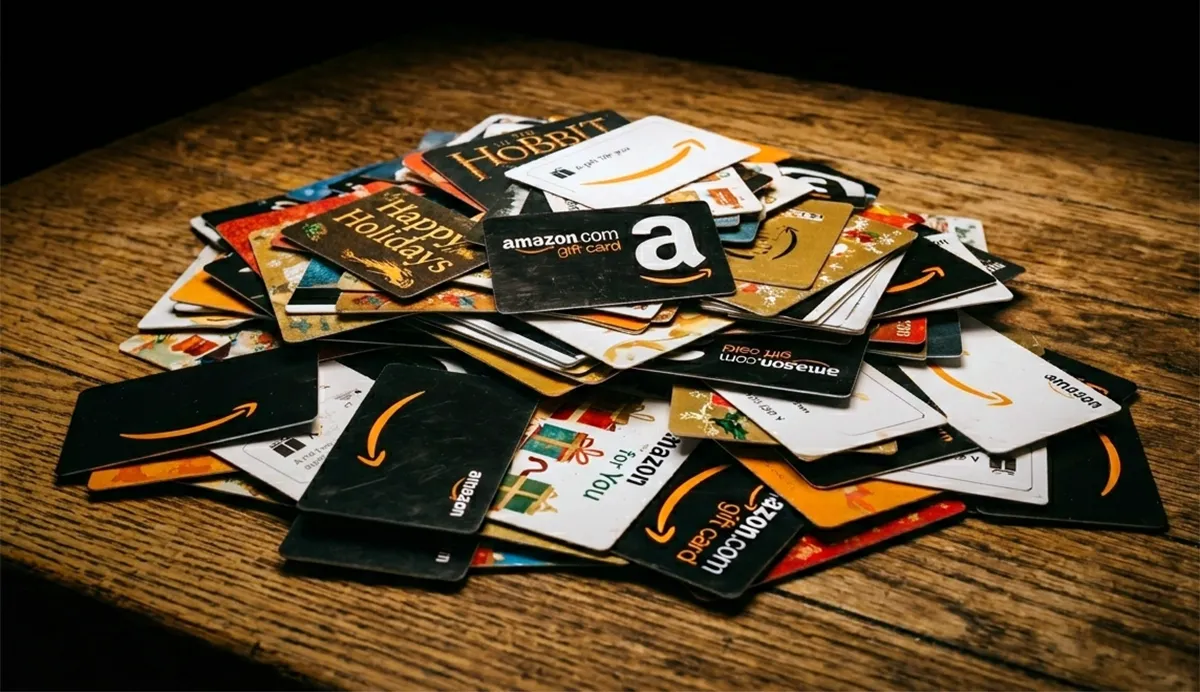
- **Low-denomination gift cards.** In its October 20, 2026 survey of 8,094 adults, the NRF found gift cards rank first on holiday wish lists at 47%, with 56% of shoppers saying the economy will affect their plans and 84% expecting higher prices because of tariffs. A $10 card for an older child is a defensible choice, not a cop-out.
- **Free books by mail.** PJ Library's FAQs state that it mails Jewish children's books to enrolled families in the U.S. and Canada monthly at no cost, roughly from ages 6 months to 8 years, with PJ Our Way letting subscribers aged 9–12 pick their own middle-grade title. Enrollment depends on having a local PJ Library community and on that community's funding, so check availability for your address before you plan a night around it.
Check small parts before a cheap toy goes in the pot
Budget exchanges pull in dollar-store finds, party-favor multipacks, and white-elephant oddities, and those are exactly the categories where choking hazards show up. Federal rules draw a bright line: 16 CFR Part 1501 bans toys for children under three that contain any part fitting entirely — uncompressed, in any orientation — into a small-parts cylinder 2.25 inches long by 1.25 inches wide. For older children, the U.S.
Consumer Product Safety Commission requires choking warnings under 16 CFR 1500.19 on small parts, balloons, marbles, and small balls. A multipack without that labeling is worth a second look before it reaches a mixed-age table. Two mechanical checks cover most of it.
Toilet-paper tubes approximate the small-parts cylinder closely enough for a quick sort, and foil-wrapped gelt itself is a small round object — fine for school-age kids, not for a toddler circling the table.
Frequently Asked Questions
How many gifts does a child actually need for eight nights?
Eight occasions do not require eight purchased gifts. A common split is two wrapped gifts, two handmade, two shared activities, one dreidel night, and one book.
Are gift cards a reasonable Hanukkah gift for a kid?
The NRF's October 2026 survey found gift cards top holiday wish lists at 47%, so a low-denomination card for an older child reflects what recipients say they want.
What can children ante in a dreidel game if we skip chocolate?
Chabad.org's rules describe pennies, nuts, or chocolate gelt coins. Anything small and countable works, since the pot redistributes rather than being spent.